
Politics-News

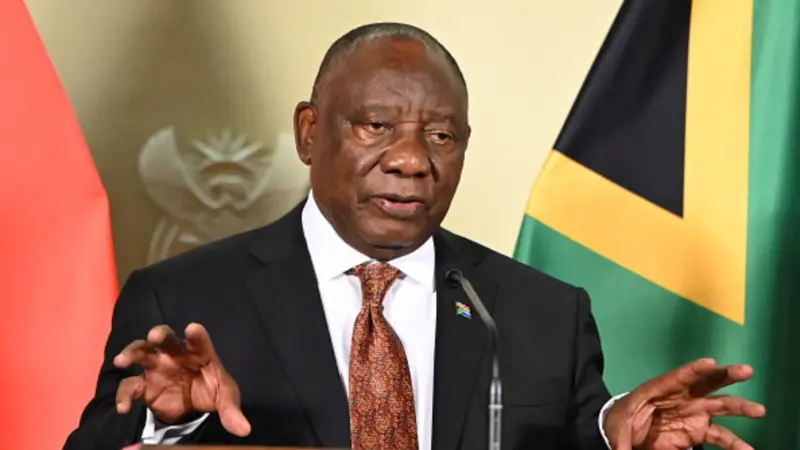
Ramaphosa Calls for Unity and Inclusive Solutions During South Africa’s Youth Day Commemoration

Ramaphosa Calls for Unity and Inclusive Solutions During South Africa’s Youth Day Commemoration

South African President Cyril Ramaphosa has called for unity and constructive engagement in addressing the country’s social and economic challenges, emphasizing that cooperation and shared responsibility are key to building a stronger nation. Speaking during Youth Day commemorations marking the 1976 Soweto uprising, Ramaphosa honored the students who played a pivotal role in South Africa’s struggle for freedom and democracy. The annual event remembers the young people who stood up against apartheid-era education policies and helped shape the country’s future. During his address, Ramaphosa encouraged South Africans to work together in addressing concerns related to unemployment, poverty and inequality, while promoting social cohesion and national unity. “We are not going to allow the grievances and concerns of our people to be misused and abused,” the president said, stressing the importance of finding solutions that benefit all communities. His remarks came as migration and economic development continue to be part of national discussions across South Africa, reflecting broader global conversations taking place in many countries around the world. Ramaphosa also highlighted South Africa’s longstanding tradition of openness and diversity, rejecting narratives that seek to portray the country negatively on the international stage. “There is a lot of disinformation aimed at tarnishing the image of South Africa,” he said, noting that migration management remains a challenge faced by many nations. The president used the occasion to reflect on the aspirations of South Africa’s youth, nearly five decades after the historic Soweto uprising. While acknowledging ongoing economic challenges, he emphasized the importance of expanding opportunities for young people through education, skills development and job creation. Youth Day remains one of South Africa’s most significant national commemorations, serving as both a tribute to the courage of past generations and a reminder of the work that continues to build a more inclusive and prosperous future. African Updates
Ethiopians Vote in Parliamentary Elections as Prime Minister Abiy Ahmed Seeks New Mandate

Ethiopians headed to polling stations on Monday for parliamentary elections expected to reinforce the political dominance of Prime Minister Abiy Ahmed and his ruling Prosperity Party.

Voting began early across the country, with more than 50 million registered voters eligible to cast ballots at around 48,000 polling stations nationwide. Polls opened at 6 a.m. local time and were scheduled to close 12 hours later, according to Ethiopia’s National Election Board.

Vote Counting Begins in Guinea After Legislative and Municipal Elections

Vote counting was underway in Guinea on Monday following legislative and municipal elections seen as an important stage in the country’s ongoing political transition under President Mamadi Doumbouya.

The polls, held across the West African nation on Sunday, were part of efforts to restore constitutional governance after the 2021 military takeover that brought Doumbouya to power.

More than seven million registered voters were eligible to elect 147 members of parliament as well as local municipal representatives in a nationwide ballot closely watched across the region.

WHO Warns Conflict in DR Congo Is Fueling Rapid Spread of Ebola Outbreak

The World Health Organization has warned that escalating violence in eastern Democratic Republic of Congo is severely undermining efforts to contain a growing Ebola outbreak, raising fears of a worsening humanitarian and public health crisis.

WHO Director General Tedros Adhanom Ghebreyesus said the combination of armed conflict and disease posed a major threat in the mineral-rich eastern region of the country, where insecurity has complicated access for health workers and humanitarian agencies.

African leaders in Kigali say economic freedom is continent’s next liberation struggle

African leaders and policymakers gathering in Kigali to mark Africa Day said the continent must now focus on economic sovereignty and regional integration more than six decades after political liberation movements swept across Africa.

The Africa Liberation Day celebrations, organized by the Pan African Movement Rwanda Chapter on Sunday, brought together senior officials, diplomats and Pan-African leaders under this year’s theme on sustainable water access and sanitation as part of the African Union’s Agenda 2063 vision.

Mali Defence Minister Sadio Camara Killed in Coordinated Attacks

Mali’s Defence Minister, General Sadio Camara, has been killed during a series of coordinated attacks on military targets across the country, according to an official government statement.

Government spokesperson Issa Ousmane Coulibaly confirmed that Camara died after armed assailants attacked his residence in the garrison town of Kati on Saturday. The attack was part of a wider offensive carried out simultaneously in multiple regions.

Kati, located about 15 kilometres northwest of the capital Bamako, is considered one of Mali’s most secure military strongholds. Despite this, fighters linked to the al-Qaeda-affiliated group Jama’at Nusrat al-Islam wal-Muslimin (JNIM), alongside Tuareg rebels from the Azawad Liberation Front (FLA), managed to breach the area.

Trump Extends Iran Ceasefire as Blockade Enforcement Continues

Donald Trump has announced an extension of a fragile ceasefire with Iran, citing a request from Pakistan and stating that he is awaiting what he described as a “unified proposal” from Tehran.

The decision comes as a two-week truce approaches its expiration, with diplomatic prospects appearing increasingly uncertain. Trump said the ceasefire would remain in effect until Iran submits a proposal and negotiations are concluded “one way or the other.”

Ghana Leads UN Push to Classify Slave Trade as Crime Against Humanity

Ghana is stepping up its campaign at the United Nations, using both diplomacy and cultural advocacy to call for formal global recognition of the transatlantic slave trade as a crime against humanity.

During remarks in New York, president John Dramani Mahama highlighted that the impact of slavery goes far beyond history, pointing to the systematic dehumanization of Africans as a foundation for inequalities that still exist today. He spoke at a high-level forum centered on reparatory justice.

Zimbabwe Political Tensions Rise as Tendai Biti Granted Bail Amid Constitutional Reform Debate

Political tensions in Zimbabwe are escalating as opposition leader Tendai Biti has been granted bail following a weekend in detention. Biti was arrested near the Mozambique border alongside a fellow activist, facing allegations of holding a public gathering without notifying authorities.

A court in Mutare ordered the release of both individuals on $500 bail, requiring them to report to police every two weeks as part of their conditions.

However, the incident reflects broader unrest across the country. Zimbabwe is currently grappling with controversy over proposed constitutional amendments that could extend President Emmerson Mnangagwa’s rule beyond 2028. The changes may also shift presidential elections from a direct public vote to a parliamentary process, sparking widespread concern.

Namibia and Rwanda Unite to Redefine Justice and Rehabilitation in Africa

In a powerful display of Pan-African cooperation, a high-level delegation from the National Assembly of the Republic of Namibia convened at the Rwanda Correctional Service (RCS) Headquarters in Kigali yesterday, Wednesday, January 28, 2026.

The visit, part of a week-long oversight exchange program, highlights a growing trend across the continent: moving away from traditional “prison” mentalities toward holistic rehabilitation and reintegration.

The delegation, led by Hon. James Uerikua, Chairperson of the Standing Committee on International Relations, Defense, and Security, was received by CG Evariste Murenzi, Commissioner General of RCS. The meeting served as a platform to discuss how Rwanda has transformed its justice system in the three decades following the 1994 Genocide against the Tutsi.