Kenya has stepped up Ebola surveillance and border controls after recording its first case, following concerns over how the virus crossed several borders before being detected in Nairobi.
The patient, a Kenyan man who had lived in the Democratic Republic of Congo for seven years, became ill after travelling for weeks through Uganda before flying to Nairobi on Saturday. He tested positive for Ebola at a hospital in the capital and died on Monday.
Africa CDC Director-General Jean Kaseya said the case highlighted the need for stronger surveillance at points of entry across the region.
“We need to ensure that at point of entry, we have a strong surveillance system in place,” Kaseya told the Associated Press.
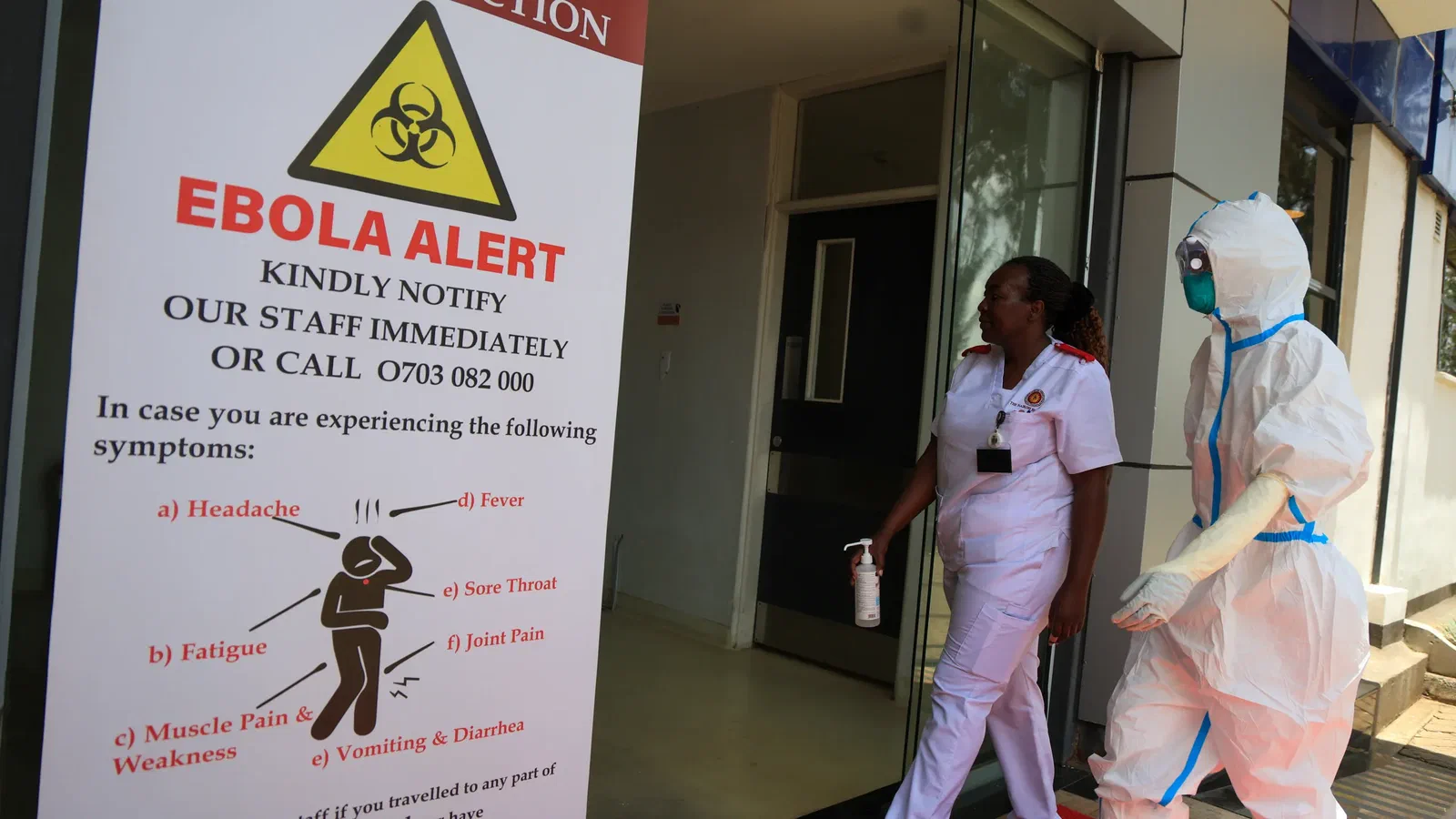
In response, Kenya’s Health Ministry has increased screening and surveillance at border crossings and introduced a hotline for people to report suspected Ebola symptoms.
The government has designated five health facilities with a combined 241 isolation beds to treat suspected or confirmed patients and said it is working to expand capacity.
Kenya also says it has sufficient medical supplies, including personal protective equipment, after mobilising resources since the outbreak began in Congo in May.
At Jomo Kenyatta International Airport, a dedicated entry gate has been assigned to passengers arriving from 10 countries located in the outbreak’s epicentre.
Ebola can spread through contact with infected bodily fluids and contaminated materials, making early detection and effective border surveillance critical to preventing further transmission.
African Updates