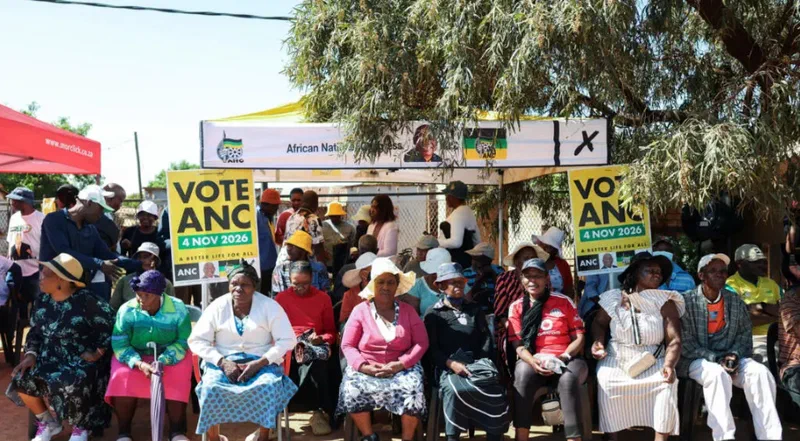
Vote counting has begun in South Africa following local government elections held on Wednesday, with control of major cities and the performance of the ruling African National Congress (ANC) among the main issues.
The elections covered 257 municipal councils and are seen as an important indication of public opinion ahead of the 2029 national elections.
Many voters expressed frustration over unreliable water and electricity supplies, unemployment, crime and deteriorating public infrastructure.
Moses Mashaba, a 27-year-old street vendor in Johannesburg’s Soweto township, said poor services and unemployment influenced his decision to vote. Others, however, stayed away, questioning whether political parties could deliver meaningful change.
Polling stations closed at 9 p.m. local time, although people still in queues were allowed to vote. According to the Electoral Commission, 12 million of the 29.2 million registered voters had cast ballots by 5 p.m. on Wednesday. About 1.4 million people also voted during the two days of early voting.
Voting was largely peaceful, despite some logistical challenges and reported confrontations between supporters of political parties.
President Cyril Ramaphosa, after casting his ballot, said the elections demonstrated that South Africa’s democracy remained active. He also pledged efforts to improve local government services.
The ANC, which has governed since the end of apartheid in 1994, is expected to remain the country’s largest political party, although its support has declined in recent elections. It received just over 40% of the vote in the 2024 national elections, forcing it to form a government with nine other parties.
The opposition Democratic Alliance (DA) is seeking to maintain control of Cape Town while challenging the ANC in Johannesburg. Meanwhile, former president Jacob Zuma’s uMkhonto weSizwe (MK) party is targeting Durban.
With no single party expected to secure outright majorities in several major cities, coalition negotiations are likely to shape the next municipal administrations.
Political analyst Kingsley Makhubela said voters were increasingly concerned about basic services, including water, electricity, roads and sanitation, rather than party loyalties.
The Electoral Commission said final results were expected by Sunday.
African Updates

